Pregnancy Calculator
Calculate your due date, current pregnancy week, trimester, and key milestones from your last menstrual period or conception date. Trusted by parents worldwide.
⚠️ Medical disclaimer: This due date is a standard 40-week estimate (Naegele's rule) based on average cycle assumptions — every pregnancy is different. It's a planning tool, not prenatal care. Please confirm your dates and any health concerns with your OB-GYN or midwife.
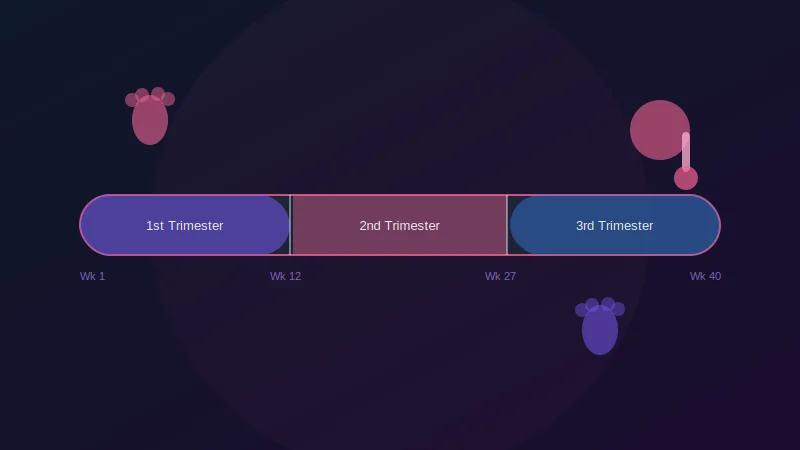
📊 The 40-Week Pregnancy Timeline
🤰 About the Pregnancy Calculator
A pregnancy calculator is an essential tool for expectant parents, helping determine the estimated due date (EDD), track the current pregnancy week and trimester, and map out key developmental milestones from the comfort of home. The standard method used universally by obstetricians calculates the due date by adding exactly 280 days — or 40 weeks — to the first day of the last menstrual period (LMP). This approach, known as Naegele's Rule, has been the global clinical standard for over two centuries and forms the core of this free calculator. Our tool also supports entry via conception date or a known due date, giving you flexibility depending on what information you have available.
Pregnancy is divided into three distinct trimesters, each representing a major phase of fetal development. The first trimester (weeks 1–12) covers fertilisation, implantation, and the formation of all major organs — by the end of week 10, the embryo is officially a fetus. The second trimester (weeks 13–26) is often the most comfortable phase; the baby grows rapidly, movement becomes noticeable, and many parents discover the baby's sex via the anatomy scan around weeks 18–20. The third trimester (weeks 27–40) is the final stretch where the baby gains weight, the lungs mature, and the body prepares for labour. Understanding where you are in this journey — which week, which trimester, and which milestones are ahead — helps you prepare medically, emotionally, and practically.
📜 History of Pregnancy Calculation
The method at the core of every modern due-date calculator dates back to the early 19th century. Franz Karl Naegele (1778–1851), a German obstetrician at the University of Heidelberg, published his rule for estimating delivery dates in 1812. Naegele's Rule works by taking the first day of the last menstrual period, subtracting three months, and adding seven days — equivalent to adding 280 days or 40 weeks. Before this, pregnancy dating was largely guesswork based on "quickening" (when the mother first feels fetal movement, typically around weeks 16–20), which varied widely between women. Naegele standardised obstetric dating across Europe, and his formula was adopted globally through the 20th century. The first ultrasound used for pregnancy dating was performed by Ian Donald in Glasgow in 1958, revolutionising early fetal measurement. By the 1970s, first-trimester ultrasound using crown-rump length (CRL) measurement became the gold standard for confirming due dates, refining accuracy to within ±5 days when performed before 13 weeks. Today's digital pregnancy calculators apply the same 280-day rule but add support for custom cycle lengths, multiple input methods, and instant milestone generation — all making Naegele's 19th-century formula more accessible than ever.
📊 Pregnancy Trimesters & Key Milestones at a Glance
| Stage / Week | Trimester | Key Development | Medical Event |
|---|---|---|---|
| Week 4 | 1st Trimester | Implantation complete; pregnancy test positive | Confirm pregnancy with GP/midwife |
| Week 6–8 | 1st Trimester | Heartbeat detectable; embryo ~1.6 cm | Early viability scan (optional) |
| Week 12 | End of 1st Trimester | All major organs formed; miscarriage risk drops sharply | Dating scan + nuchal translucency screening |
| Week 18–20 | 2nd Trimester | Baby's sex often visible; movement felt (quickening) | Mid-pregnancy anatomy scan |
| Week 24 | 2nd Trimester | Viability milestone — survival possible with specialist care | Glucose screening (gestational diabetes) |
| Week 28 | Start of 3rd Trimester | Eyes open; lungs beginning to mature | Growth scan; anti-D injection (if Rh-negative) |
| Week 37 | 3rd Trimester | Early term — baby ready to survive outside womb | Pre-labour checks; hospital bag ready |
| Week 40 | Full Term | Estimated due date (EDD) — birth imminent | Membrane sweep or induction if overdue |
🎯 Common Uses
- Estimated Due Date (EDD): Calculate your expected delivery date from your last menstrual period — the most common and trusted input method.
- Pregnancy Week Tracking: Know exactly which week and day of pregnancy you are in, updated in real time from any start date you enter.
- Trimester Planning: Understand which trimester you are currently in and plan for the key tests and milestones associated with each phase.
- Prenatal Appointment Scheduling: Use your personalised milestone dates to plan when to book your dating scan, anatomy scan, and third-trimester check-ups.
- Conception Date Calculation: Work backwards from a known due date to estimate the likely conception date, useful for surrogacy or IVF planning.
- Maternity Leave Planning: Calculate how many weeks remain until your due date so you can time your maternity leave start date accurately.
- Sharing Pregnancy Progress: Know your exact week and trimester to share with family, friends, and employers — "I am 22 weeks and 3 days" is far more meaningful than just a due date.
📋 How To Use This Pregnancy Calculator
- Select your input mode: Choose between From LMP (last menstrual period — recommended), Conception Date, or Due Date depending on what you know.
- Enter your date: Type or pick the relevant date in the date field. If using LMP mode, enter the first day your most recent period started — not when it ended.
- Adjust cycle length (LMP mode only): The default is 28 days. If your cycles are longer or shorter, update this field for a more accurate due date estimate.
- Click the Calculate button: Press the pink Calculate button. Your estimated due date, current pregnancy week, trimester, and days remaining will display instantly.
- Review milestone dates: Scroll through the milestone section below the results to see exact calendar dates for each key development from Week 8 to Week 40.
- Save or share your results: Screenshot your results, or share this page URL with your partner or midwife — no account or signup is needed.
🧮 Worked Example — LMP to Due Date
Say your last period started on March 4 and your cycles usually run close to the textbook 28 days. Naegele's Rule adds exactly 280 days to that date, landing the estimated due date on December 9 — 40 weeks later. If your cycles actually run longer, say 32 days, the calculator adjusts by adding the extra 4 days on top, moving the estimate to around December 13, since ovulation happens later relative to the start of a longer cycle. This is exactly why the cycle-length field matters: two people with the same LMP date but different cycle lengths can have due dates several days apart, and the calculator accounts for that rather than assuming a flat 28-day cycle for everyone.
🔗 Related Health Tools
⚠️ Common Mistakes
- Assuming a fixed 28-day cycle — due date estimates based on last menstrual period assume a 28-day cycle; irregular cycles shift the real due date.
- Treating the due date as exact — only about 5% of babies are born on their exact due date; a range of 37–42 weeks is considered full term.
- Confusing gestational age with fetal age — gestational age is counted from the last menstrual period, about two weeks before actual conception.
📚 References
Additional context — Clinically, first-trimester ultrasound dating is generally considered more accurate than LMP-based dating alone, particularly for people with irregular cycles. Ultrasound measurements (crown-rump length) typically carry a margin of error of about 5–7 days, compared to LMP calculations that can be off by two weeks or more when actual cycle length differs from the assumed average.
🔗 Related Calculators
View all Health Calculators →Frequently Asked Questions
❓ How is the pregnancy due date calculated?
The due date is calculated by adding 280 days (40 weeks) to the first day of your last menstrual period (LMP). This is Naegele's Rule, published by German obstetrician Franz Karl Naegele in 1812 and still the universal clinical standard today. The rule assumes a 28-day cycle with ovulation on day 14. If your cycle is longer or shorter, this calculator adjusts the due date accordingly to improve accuracy.
❓ What are the three trimesters of pregnancy?
The first trimester runs from week 1 to week 12 and covers early embryonic development — the heart begins beating around week 6, and all major organs are formed by week 12. The second trimester (weeks 13–26) is when the baby grows most rapidly, movement begins, and the anatomy scan takes place around weeks 18–20. The third trimester (weeks 27–40) sees the baby gain weight, the lungs mature, and labour preparation begin. Each trimester has distinct medical checkpoints and developmental goals.
❓ What is gestational age, and how is it different from fetal age?
Gestational age counts pregnancy in weeks from the first day of your last menstrual period (LMP), which means it includes approximately two weeks before conception actually occurred. Fetal age (embryonic age) counts from the actual day of conception. Doctors use gestational age as the universal standard because most women know their LMP date but not their exact conception date. A fetus described as "12 weeks gestational age" is actually only about 10 weeks old in developmental terms.
❓ How accurate is the estimated due date (EDD)?
Research shows only about 4–5% of babies are born on their exact estimated due date. Around 80% of births occur within two weeks before or after the EDD. The most accurate way to confirm a due date is a first-trimester ultrasound before 13 weeks, which measures the fetus directly and is accurate to within ±5 days. Factors such as irregular menstrual cycles, late ovulation, or uncertainty about the LMP date can reduce the accuracy of calendar-based estimates.
❓ What is a premature birth?
A premature (preterm) birth is any delivery that occurs before 37 completed weeks of pregnancy. Late preterm births (34–36 weeks) often require extra monitoring but generally have good outcomes. Very preterm births (28–33 weeks) require specialised neonatal intensive care. Extremely preterm births (before 28 weeks) carry the highest risks, though survival rates have improved significantly with modern neonatal medicine. Full-term pregnancy is defined as 39–40 weeks; birth at 41+ weeks is classified as late-term.
❓ When does morning sickness start and end?
Morning sickness — nausea and vomiting — typically begins around weeks 6–8 after the LMP, triggered by rapidly rising levels of the pregnancy hormone hCG (human chorionic gonadotropin). Symptoms usually peak at weeks 9–10 and ease for most women by weeks 12–14 as hCG levels stabilise. About 10–15% of women experience nausea throughout the entire pregnancy. Severe, persistent vomiting that causes dehydration or weight loss is a condition called hyperemesis gravidarum and requires medical attention.
❓ Can I use this calculator if I have irregular periods?
Yes. This calculator lets you enter a custom menstrual cycle length from 21 to 45 days. Women with longer cycles tend to ovulate later than day 14, pushing the due date forward; those with shorter cycles ovulate earlier, moving the due date back. For highly irregular cycles — such as those associated with PCOS or recent hormonal contraceptive use — a first-trimester ultrasound is the most reliable dating method, as it measures fetal size directly rather than relying on cycle length assumptions.
❓ What is the viability milestone at week 24?
Week 24 is recognised as the threshold of viability — the point at which a premature baby has a realistic chance of surviving outside the womb with intensive medical support. Survival rates at 24 weeks range from approximately 40–70% at well-equipped neonatal intensive care units (NICUs), and improve dramatically with each additional week. By 28 weeks, survival exceeds 90%. The viability threshold has moved earlier over the past four decades due to advances in neonatal care, surfactant therapy for lung development, and improved incubator technology.